Blog

A new x-eos for ternary feldspars

What’s new?

We have published new x-eos for plagioclase and alkali feldspars:

TJB Holland, ECR Green & R Powell (2021). A thermodynamic model for feldspars in KAlSi3O8-NaAlSi3O8-CaAl2Si2O8 for mineral equilibrium calculations. Journal of Metamorphic Geology, 1-14. DOI: 10.1111/jmg.12639

The preferred ternary feldspar x-eos in this paper is the 4TR model (the name is discussed below). This single x-eos replaces two previous x-eos: the Ibar1 and Cbar1 ternary feldspar x-eos of Holland & Powell (2003), Contributions to Mineralogy and Petrology, 145 492-501.

Additionally, we have introduced a binary x-eos to represent low albite with minor dissolved Ca. This can be used to model the peristerite gap in metabasites, where previously we used pure end-member albite.

Continue reading “A new x-eos for ternary feldspars”

fO2 workshop/school this September

Please consider pre-registering for the following event!:

Understanding oxygen fugacity in Geoscience is a workshop/school running 5-9 September 2022, to highlight the state of the art, major debates and some case studies about redox processes and oxygen fugacity from the Earth’s interior to the surface. It will bring together experts from various disciplines and it is directed to students and scientists with background on chemistry and physics of the Earth and planetary interiors. The School is hosted by the Department of Mathematics and Geosciences, University of Trieste. We also hope to make the School available to online-only participants.

Eleanor Green and Katy Evans are among the speakers and practical leaders at this School, which will address thermodynamic modelling in addition to experimental, analytical and observational themes.

We thank Luca Ziberna for proposing this School, for patiently persisting with the idea throughout the disruption of the pandemic, and for his exceedingly hard work in leading the Organizing Committee!

Modelling deserpentinization

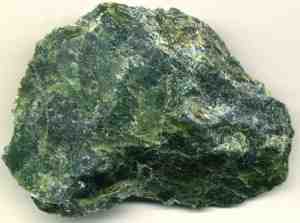
Serpentinite from the Thetford Mines Ophiolite Complex, Ordovician; Thetford Mines area, Quebec, Canada. Attribution: James St. John, https://creativecommons.org/licenses/by/2.0, via Wikimedia Commons

In a recent paper, Katy Evans and Ronald Frost discussed deserpentinization as a source of oxidation in arc magmas.

You can access their THERMOCALC thermo datafiles here. The a-x relations were developed by Roger Powell, for Rebay, Powell & Holland, in prep.

A new THERMOCALC 3.50 for the solstice

Latest update 21 December 2020

We have updated THERMOCALC 3.50!

The scripts have changed a lot. A guide to the new scripts is bundled with the software download, and we have also updated all existing documentation and tutorials to reflect the changes. (Looking back, I see I previously claimed that scripts in tc350 were unlikely to change further – this proved to be as wrong as any other prediction about 2020.)

Progress represented in this update includes:

  • Scripts are now more concise and more self-explanatory, and THERMOCALC itself is now quite forceful in telling the user what it expects. We hope this will make the learning experience easier, and reduce the likelihood of mistakes.
  • Modebox calculations now work.
  • Previously, only pseudosection and P-T projection calculations were thoroughly scripted, with other calculation facilities being largely interactive. There is now comprehensive scripting for our other currently-operational calculation facilities:
  • There is now documentation for dogmin (G-minimisation at a P-T coordinate) – a thoughtful guide by RP on the safest way to use this rather dangerous facility.
  • Much more has happened behind the scenes in version 3.50, aimed at making the code easier to maintain. These changes are mentioned in the release notes bundled with the software.

The THERMOCALC 3.50 executable is still called “tc350beta”, reminding us that some facilities aren’t working yet: µ-µ diagrams, and calculations involving charged aqueous species, are still to come.

Download the new software here.

We wish all our users a safe and happy holiday period, and some relaxation at the end of an extraordinary year.

High-Ca opx again

Back in July, we released a new version of the igneous-set x-eos, which I claimed would prevent the appearance of a high-Ca opx in most-stable peridotitic assemblages. Soon afterwards, Ben Klein pointed out that, in fact, high-Ca opx was alive and well in his Perple_X calculations (thanks for letting me know, Ben!).

I believe we’ve now genuinely solved this. You can now download yet another set of igneous input files.

So what was wrong? Initially, Tim and I looked for the problem in the pyroxene quadrilateral, which is the heart of the opx and cpx x-eos calibration. For our previous release of files back in July, Tim removed a gremlin from the enstatite-diopside binary system (introduced by me – yikes), in which the solvus in cpx could be metastable with respect to the equivalent solvus in opx. When this didn’t eliminate high-Ca opx from the 10-component peridotite system, I flushed the same gremlin out from the rest of the pyroxene quadrilateral. But the high-Ca opx continued to mock us.

The final(?) piece of the problem related to the introduction of Ti into opx via the end-member obuf, MgAl(MgTi)0.5SiO6. Ben Klein alerted me to this by mentioning the relatively high Ti content of his high-Ca opx. The end-member properties of obuf itself are essentially unknown, so it doesn’t appear in the dataset. Instead we make an end-member with the right composition by combining Mg-tschermak’s pyroxene, periclase, rutile and corundum, and adding a ΔG term to represent the difference between their combined G(P,T) curves and the (unknown) true G(P,T) of obuf:

Gobuf = Gmgts + 1/2 (Gper + Gru – Gcor) + ΔGobuf

Since we know so little about obuf, and given that it’s only ever present in small proportions, we would not try to fit for both ΔGobuf and the mixing properties of obuf, which are also unknown. We face this problem with many end-members in the more complex x-eos. A common solution is to assign values to the mixing properties, based on the mixing properties of similar end-members, then just fit for the ΔG value, in this case ΔGobuf. However, obuf appears in such tiny proportions that in Holland et al (2018) it was simply treated as if it mixed ideally. Apparently, this wasn’t good enough, so I have given it some more realistic mixing properties, and adjusted ΔGobuf to compensate, doing something similar with obuf‘s monoclinic counterpart cbuf in the cpx x-eos. This destabilises high-Ca opx, at least in Ben’s example.

Has stable high-Ca opx really gone? Let us know if you discover further problems!

cpxwing log entry 003

This is Simon’s blog reporting on the development of a new single-clinopyroxene HPx-eos.

Lots has changed! Calibrating cpxwing turned out to be a quite difficult task, as there are complex interactions with other major phases, in particular with amphiboles at blueschist facies conditions. While fitting the models we discovered strong correlations between the end-member and mixing properties, which once established, helped us to control the interactions between amphiboles and clinopyroxene.

Using Eleanor’s omphacite model as reference we redefined several core W’s in cpxwing, allowing us to solve a recurring problem where clinopyroxene is calculated at conditions where glaucophane should be dominant. Previously this issue actually prevented us from calculating glaucophane-schists!

Currently we are working out some final tweaks of the new model, including some minor changes of the amphiboles. We are aiming to write-up in the coming months to finally unleash cpxwing into the petrological world!

Goodbye, Melbourne!

Simon’s short postdoc has (unfortunately) come to an end.

Time it was, and what a time! I had an amazing experience in this beautiful city – even though I spent more time at home than I would have hoped for.

I am extremely grateful for this dive into the wonderland of model development. Eleanor & Roger showed me a glimpse of how deep the rabbit hole goes – the bottom is not yet in sight! I am honored to be a part of this team and to have learned from these great people. Eleanor and myself will keep close contact and to work on cpxwing and many more exciting projects down the road.

Melbourne, I will miss your chatty lorikeets and amazing coffee. A year really is too short to get to know you.