Correction to the Holland et al (2018) and Tomlinson & Holland (2021) models

We have discovered an algebraic error in the silicate melt x-eos published in two of our papers and previously available through this website:

  • Holland et al (2018), which we made available as the “igneous set” of x-eos.
  • Tomlinson & Holland (2021), a variant of the Holland et al (2018) set which focused on improving calculations in anhydrous peridotitic systems.

The nature and implications of the error are discussed in: Green et al (2025), Corrigendum to: “Melting of Peridotites through to Granites: A Simple Thermodynamic Model in the System KNCFMASHTOCr”, and “A Thermodynamic Model for the Subsolidus Evolution and Melting of Peridotite”, Journal of Petrology, submitted.

Replacement “igneous set” x-eos

For the Holland et al (2018) “igneous set”, we have corrected and recalibrated the melt x-eos (many thanks to TJBH for his very hard work on this). In the process, we took the opportunity to update all of the x-eos for mineral phases to the latest versions, making the anhydrous mineral x-eos and the version of the Holland & Powell (2011) dataset consistent with those in our new alkaline to subalkaline igneous x-eos in Weller et al (2024).

The replacement x-eos (Green et al, 2025, corrected from Holland et al, 2018) will shortly (by 10th January?) be available in MAGEMin. They are documented on this website, and will soon (end of January?) be available for THERMOCALC 3.51 and above. There is currently no replacement for the Tomlinson & Holland (2021) x-eos, due to ongoing model development in anhydrous peridotitic systems.

Implications for calculations

Fortunately, as far as we’ve been able to tell (see Green et al, 2025, for more details), the error in the melt x-eos doesn’t seem to affect calculations with the former “igneous set” beyond a typical model uncertainty, as estimated in various ways:

  • Weller et al (2024) and Green et al (2016) estimate that the 1 sigma uncertainty in pseudosection boundaries is typically around +/- 1 kbar or +/- 50ºC for non-accessory phases.
  • In subalkaline systems, calculations with the replacement “igneous set” can be compared with the alkaline to subalkaline x-eos used in Weller et al (2024). In this comparison, the mineral x-eos and the key subalkaline calibration constraints are identical in both cases, but the melt x-eos have different structures, allowing the Weller et al (2024) melt x-eos to reproduce experiments in alkaline systems. The difference between these calculations suggests a scale for uncertainty, arising from the non-unique choice of structure and parameterization in melt x-eos in subalkaline systems.
  • Since 2018 we have introduced several changes to x-eos in the downloadable “igneous set”. In particular, we changed the ternary feldspar x-eos from the Holland & Powell (2003) model to the Holland et al (2021) model, reflecting our changing understanding of the best way to represent the energetics of the feldspar lattice and fit experimental data in the ternary system. A scale for the uncertainties is provided by the effect of such updates to the mineral x-eos.

Nevertheless, please let us know if you see any dramatic changes in calculations after switching to the corrected model. We will pass on new information that we learn from users via this blog and the Discussion Group.
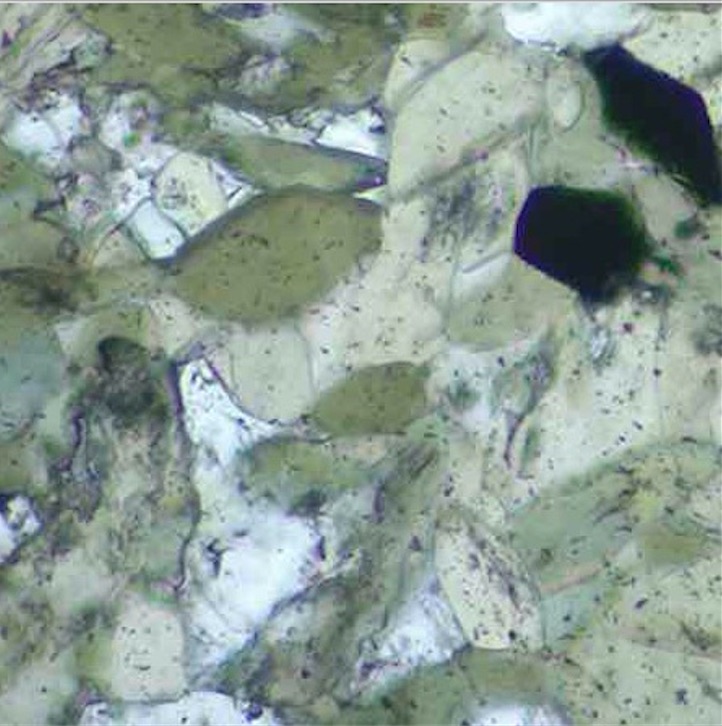
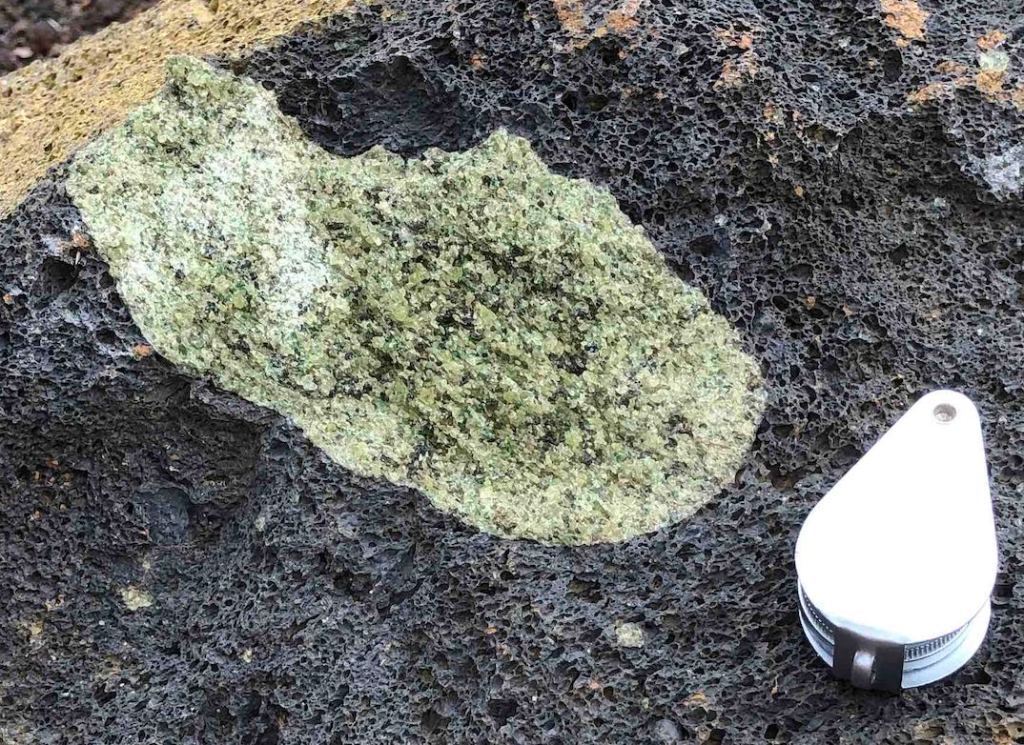
New x-eos for anhydrous alkaline to subalkaline magmatic systems

A post by Owen Weller and Eleanor Green

We’re delighted to be releasing a new suite of x-eos for calculations in anhydrous alkaline to subalkaline magmatic systems, as documented in Weller et al (2024): New thermodynamic models for anhydrous alkaline-silicate magmatic systems, Journal of Petrology 65 egae098.

The new x-eos include:

  • An anhydrous silicate melt model that is calibrated in both alkaline and subalkaline composition space.
  • X-eos for the alkaline phases nepheline, kalsilite, leucite and melilite.
  • A new x-eos for Mg-bearing ilmenite.
  • Minor updates to the garnet, orthopyroxene and clinopyroxene x-eos used in Holland et al (2018) and Tomlinson & Holland (2021).

Weller et al (2024) show how the x-eos were validated against seven experimental datasets encompassing a wide range of alkaline compositions. Based on these validation exercises, we suggest that the models are well calibrated in the range 640—1400 C and 0-22 kbar.

The new x-eos will soon (middle of this week?) be available for calculations in MAGEMin. You can find complete model descriptions on this website. However, there will be a short delay before they can be used in THERMOCALC, pending the upcoming release of THERMOCALC 3.51, which is currently expected in January 2025.

Finally, we are currently working on extending the Weller et al (2024) x-eos into H2O-bearing alkaline silicate systems. Watch this space for more news!

Buffering in THERMOCALC

Also included in the Weller et al. (2024) paper is documentation of the new ability in THERMOCALC to buffer oxygen fugacity relative a range of commonly used buffers, such as the fayalite-magnetite-quartz equilibria. As discussed in the paper, the new oxygen buffers are vital to use when comparing model results with experimental results that were acquired using buffered apparatus. We recommend that XFe3+ is tracked when using buffered pseudosections, as the implied bulk ‘O’ content varies across these diagrams in non-intuitive ways. See example figures in Weller et al. (2024) that compare XFe3+ and fO2 for both buffered and unbuffered scenarios. The new buffering feature will be available in THERMOCALC 3.51 and above.

A new x-eos for ternary feldspars

What’s new?

We have published new x-eos for plagioclase and alkali feldspars:

TJB Holland, ECR Green & R Powell (2021). A thermodynamic model for feldspars in KAlSi3O8-NaAlSi3O8-CaAl2Si2O8 for mineral equilibrium calculations. Journal of Metamorphic Geology, 1-14. DOI: 10.1111/jmg.12639

The preferred ternary feldspar x-eos in this paper is the 4TR model (the name is discussed below). This single x-eos replaces two previous x-eos: the Ibar1 and Cbar1 ternary feldspar x-eos of Holland & Powell (2003), Contributions to Mineralogy and Petrology, 145 492-501.

Additionally, we have introduced a binary x-eos to represent low albite with minor dissolved Ca. This can be used to model the peristerite gap in metabasites, where previously we used pure end-member albite.

Continue reading “A new x-eos for ternary feldspars”

High-Ca opx again

Back in July, we released a new version of the igneous-set x-eos, which I claimed would prevent the appearance of a high-Ca opx in most-stable peridotitic assemblages. Soon afterwards, Ben Klein pointed out that, in fact, high-Ca opx was alive and well in his Perple_X calculations (thanks for letting me know, Ben!).

I believe we’ve now genuinely solved this. You can now download yet another set of igneous input files.

So what was wrong? Initially, Tim and I looked for the problem in the pyroxene quadrilateral, which is the heart of the opx and cpx x-eos calibration. For our previous release of files back in July, Tim removed a gremlin from the enstatite-diopside binary system (introduced by me – yikes), in which the solvus in cpx could be metastable with respect to the equivalent solvus in opx. When this didn’t eliminate high-Ca opx from the 10-component peridotite system, I flushed the same gremlin out from the rest of the pyroxene quadrilateral. But the high-Ca opx continued to mock us.

The final(?) piece of the problem related to the introduction of Ti into opx via the end-member obuf, MgAl(MgTi)0.5SiO6. Ben Klein alerted me to this by mentioning the relatively high Ti content of his high-Ca opx. The end-member properties of obuf itself are essentially unknown, so it doesn’t appear in the dataset. Instead we make an end-member with the right composition by combining Mg-tschermak’s pyroxene, periclase, rutile and corundum, and adding a ΔG term to represent the difference between their combined G(P,T) curves and the (unknown) true G(P,T) of obuf:

Gobuf = Gmgts + 1/2 (Gper + Gru – Gcor) + ΔGobuf

Since we know so little about obuf, and given that it’s only ever present in small proportions, we would not try to fit for both ΔGobuf and the mixing properties of obuf, which are also unknown. We face this problem with many end-members in the more complex x-eos. A common solution is to assign values to the mixing properties, based on the mixing properties of similar end-members, then just fit for the ΔG value, in this case ΔGobuf. However, obuf appears in such tiny proportions that in Holland et al (2018) it was simply treated as if it mixed ideally. Apparently, this wasn’t good enough, so I have given it some more realistic mixing properties, and adjusted ΔGobuf to compensate, doing something similar with obuf‘s monoclinic counterpart cbuf in the cpx x-eos. This destabilises high-Ca opx, at least in Ben’s example.

Has stable high-Ca opx really gone? Let us know if you discover further problems!

cpxwing log entry 003

This is Simon’s blog reporting on the development of a new single-clinopyroxene HPx-eos.

Lots has changed! Calibrating cpxwing turned out to be a quite difficult task, as there are complex interactions with other major phases, in particular with amphiboles at blueschist facies conditions. While fitting the models we discovered strong correlations between the end-member and mixing properties, which once established, helped us to control the interactions between amphiboles and clinopyroxene.

Using Eleanor’s omphacite model as reference we redefined several core W’s in cpxwing, allowing us to solve a recurring problem where clinopyroxene is calculated at conditions where glaucophane should be dominant. Previously this issue actually prevented us from calculating glaucophane-schists!

Currently we are working out some final tweaks of the new model, including some minor changes of the amphiboles. We are aiming to write-up in the coming months to finally unleash cpxwing into the petrological world!

Team news – October 2020

A quick round-up of news on team members and projects related to the HPx-eos and THERMOCALC:

Simon Schorn recently moved to Austria, where he has been awarded a grant to work at the University of Graz on fluid infiltration during metamorphism. Congratulations Simon! He had a strange year as Eleanor’s post-doc in Melbourne, spending two thirds of it in actual or effective lockdown, but we look forward to continued collaboration and a belated farewell dinner once international travel resumes. While in Melbourne, Simon did excellent work on cpx- and amphibole-bearing equilibria in subsolidus metabasite systems, making key insights that will help us with modelling the blueschist facies. His monstrous new cpx x-eos, cpx-wing, just needs its laser cannons added before it’s ready for take-off.

Springtime in Melbourne. I need to work on my eucalypt identification.

Corinne Frigo has just completed a marathon experimental programme at ANU, which has highlighted where we could improve the igneous x-eos in dry peridotite systems. We appreciate Corinne’s results all the more because she has persevered with her work through bushfires, a devastating hailstorm that put her lab out of action, and the pandemic. Well done Corinne!

John Mansour has done some magnificent work on TawnyCALC – and the delay in completing and releasing it is entirely my fault, sorry John! More news on this soon.

Katy Evans rightly pointed out that the set of hydrated ultramafic x-eos used in Evans & Powell (2015; J Metam Geol 33 649-670) should be on this site. She has been preparing the input files for this, and they should be ready to go shortly.

RP is focusing on updates to THERMOCALC 3.50. He has implemented a number of changes to the scripting, aimed at making it simpler, more transparent, and better at helping the user when things go wrong. He is currently restoring some functionality related to calculations with fluids that has been lost in recent versions. Once a new version of the program is ready for release, we will also be able to make Simon’s long-awaited pseudosection tutorial available, with up-to-date scripts.

Tim Holland continues to develop the dataset and igneous-set x-eos. In particular: an update for peridotite melting relations; updates for Ti in various phases (ru, ilm, melt); updating spinels with Eleanor; adding CO2 and S to melts, the last two in quite early but promising stages; working with RP on a simple ternary feldspar model that is continuous in composition (without the distinct C1/I1 phases); and on a nepheline model with Owen Weller.

Finally, in between battles with high-Ca opx and cpx-wing, Eleanor Green has been investigating some xenolith data from the Lesser Antilles volcanic arc, collected by Jon Blundy’s team at the University of Bristol. The xenoliths sample the upper part of the magmatic system that created each island, and their whole-rock chemistry and mineral assemblages contain insights into how this magmatic system varies along of the arc. These rocks are very high variance – they have many dimensions of significant compositional variability, but few phases – so forward modelling has proved too challenging for the current generation of x-eos. Fortunately, this is where the (S)COlP barometers come in useful.


Profiles of the team can be found here. We welcome questions and comments, via the comment form, or, even better, the Discussion Group.

New igneous x-eos: No more stable high-Ca opx

I’ve just issued an update to the igneous set of x-eos, involving tiny changes to the thermo of orthopyroxene (provided by Tim Holland). This should prevent high-Ca orthopyroxene from being stable, as has been seen in some calculations on peridotite. I’ll let Jamie Connolly know, so hopefully this change will shortly be implemented in Perple_X too.


Update Oct 2020: This did not solve the problem…. But hopefully the new update to the igneous set, dated 31-10-2020, will do.

Resurfacing

As Melbourne goes back into lockdown, we reach the end of a bruising semester. Many apologies to those who have asked me questions recently and got no answer. Please ask again if your problem is still outstanding, as I have lost track of who you are.

Much appreciation to those of you who are, or soon will be, training the next generation of practical petrologists over the internet – and also to those budding petrologists who are being trained!

I hope all of you and your folks are safe and well,

Eleanor

COVID-19 hiatus

Dear friends, colleagues, and all HPx-eos/THERMOCALC users,

There will be a hiatus in news, as, in common with the rest of the global community, we work to handle the effects of the COVID-19 pandemic on our professional and personal lives. I hope to return to website developments in June, after the end of semester.

Wishing all of you the very best at this difficult time,

Eleanor and the rest of the team